
Thames River
Río Támesis
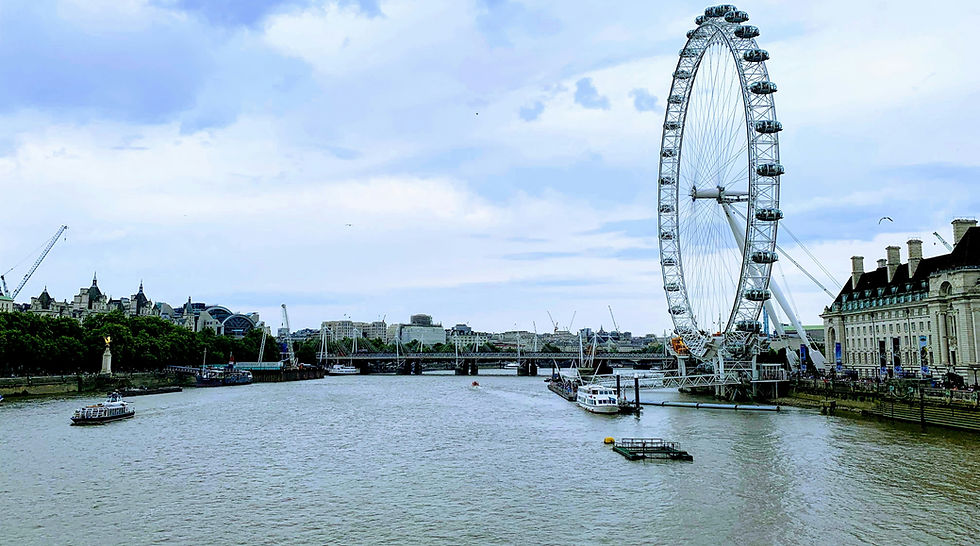
El río Támesis fluye a través del sur de Inglaterra, desde Thames Head en Gloucestershire hasta el Mar del Norte a través del estuario del Támesis. El Támesis drena toda el área de Londres, fluyendo por la ciudad de oeste a este y pasando por algunos de sus monumentos más icónicos, incluyendo el Parlamento y el Ojo de Londres.
La sección de marea del Támesis incluye la mayor parte de su paso por Londres y se extiende río arriba hasta Teddington. Debido a que el río está conectado con el Mar del Norte, este experimenta dos mareas altas y dos mareas bajas cada día, con una variación de nivel de hasta 7 m (23 ft). A lo largo de su curso, existen 45 esclusas de navegación con diques acompañantes, es decir, presas bajas construidas para elevar el nivel del agua río arriba o regular su flujo. El Támesis es alimentado por al menos 50 afluentes, incluidos el río Kennet, el río Lea y el río Windrush.
The River Thames flows through southern England, from Thames Head in Gloucestershire to the North Sea via the Thames Estuary.
The Thames drains the whole of Greater London, flowing through the city from west to east and passing some of its most famous landmarks, including the Houses of Parliament and the London Eye.
The tidal section of the Thames includes most of its stretch through London and extends upstream to Teddington. Because the river is connected to the North Sea, it experiences two high tides and two low tides each day, with a tidal range of up to 23 ft (7 m).
Along its course are 45 navigation locks with accompanying weirs—that is, low dams built to raise the water level upstream or regulate its flow. The river is fed by at least 50 named tributaries, including the River Kennet, the River Lea, and the River Windrush.
.jpg)
Photo by Craig Garnham
The Thames has been dramatically altered over many years as human habitation has spread, however wildlife has found niches in which to flourish. There are a variety of habitats along the Thames and its tributaries – riverbank, tree lines, wet woodland, ponds, grazed water meadows, hedgerows, scrub, wetlands and open parkland - which are home to numerous species, including fish, birds, and a growing number of seals.

Photo by Wanda Bodnar
El Támesis ha sido alterado drásticamente a medida que la presencia humana se ha expandido. Sin embargo, la vida silvestre ha encontrado nichos en los que prosperar. Al día de hoy existe una variedad de hábitats a lo largo de su curso y sus afluentes: orillas de río, bosques húmedos, estanques, praderas, setos, matorrales, humedales y parques abiertos, que albergan numerosas especies, incluidos peces, aves y un número creciente de focas.
The River Thames is a major source of drinking water, and large volumes of water are abstracted from it for public supply. One of the companies responsible for water supply and wastewater services in south-east England is Thames Water, which provides drinking water and treats wastewater for more than 10 million customers across London and the Thames Valley.
In recent years, the River Thames has attracted significant public attention because of repeated discharges of untreated sewage into its waters. For example, throughout 2020, 3.5 billion litres of untreated sewage were discharged into the Thames from the Mogden Wastewater Treatment Works in Isleworth, west London—seven times the volume discharged in 2016 (BBC, 2022).
The ongoing pollution of the Thames by untreated sewage has prompted a wide range of protests and public campaigns. These have included banner drops by Extinction Rebellion activists, spiritual water ceremonies conducted on the riverbanks, and calls from groups such as We Own It for the water industry to be brought back into public ownership.
El agua del río Támesis es extraída en grandes volúmenes para proveer su uso en varias poblaciones en el sureste de Inglaterra. Una de las empresas encargadas de la distribución de agua y saneamiento en esta región es Thames Water, que proporciona agua potable y trata aguas residuales para más de 10 millones de habitantes en Londres y el valle del Támesis.
En los últimos años, el río Támesis ha estado en el centro de la atención pública debido a los vertidos recurrentes de aguas residuales sin tratar en su cauce. Por ejemplo, durante todo el año 2020, 3.5 mil millones de litros de drenaje sin tratar ingresaron al Támesis desde la planta de tratamiento Mogden, localizada en Isleworth, al oeste de Londres. Dicha cantidad representa siete veces más que lo vertido en 2016 (BBC, 2022).
La continua contaminación del Támesis ha provocado una amplia gama de protestas y campañas públicas, incluyendo despliegues de pancartas por activistas del grupo ambientalista Extinction Rebellion, ceremonias espirituales realizadas en las orillas del río y campañas de grupos como We Own It para que los servicios de provisión y tratamiento de agua vuelvan a ser de propiedad pública.
.jpeg)
References
Referencias
BBC, 2022. River Thames: More than 2bn litres of raw sewage discharged over two days. https://www.bbc.co.uk/news/uk-england-london-60046320 (Accessed on 10/06/2026).